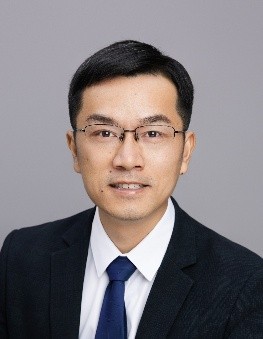
Prof. Hua Zhong
Associate Professor (tenured), Senior Researcher Scientist, Eastern Institute of TechnologySpeech Title: The oxidative reactive zone built on Fe-based particles for groundwater remediation
Abstract: In situ reactive zone has been recognized as an effective method to deep groundwater remediation. The traditional reactive zones depend on reduction or microbial degradation for contaminant removal with the aid of the emplaced materials such as zero valent iron nanoparticles. These traditional reactive zones, however, are not effective in removing diverse organic contaminants which are recalcitrant to reductive or microbial transformation. The oxidative reactive zone, which activates in situ the oxidants injected to degrade contaminants, offers an alternative to the traditional one since oxidation, typically advanced oxidation processes, has much less selectivity to contaminants. The Fe-based materials, such as Fe minerals, Fe-based complex metal oxides and Fe-doped carbon, has high potential in application for the oxidative reactive zone due to the potential of Fe-containing compounds to activate oxidants and the high availability of these materials. The successful application of the method asks for success in two aspects: one is the high efficiency and sustainability of the Fe-based materials for activation of oxidants such as persulfate and H2O2, and the other is the high transportability of the materials in micro or nano particle form in pores of the aquifer for deployment of the reactive zone. Also the cost-effectiveness of contaminant removal should also be counted, especially when the concentration of the contaminants is low. that A series of studies have been conducted by the research team in recent years to address these needs and this presentation will report the results in a comprehensive way.
Biography: Dr. Hua Zhong is currently a senior researcher in the Eastern Institute of Technology, Ningbo, China. His research is focused on transport and transformation of contaminants in porous media and novel technologies for in situ groundwater remediation and rainwater treatment. He was selected for the national high-level talent support program of China and had secured 20+ research projects from multiple sources including National Natural Science Foundation and the Ministry of Science and Technology of China. He also participated as a key member in 3 projects funded by the SUPERFUND program, Department of Defense, and Department of Energy of US. He has published more than 150 peer-reviewed journal articles and authorized 20+ patents. He had a Web-of-Science core citation number over 6000 and H-index of 40, and was listed as Elsevier BV-Stanford University global 2% top scientist several times. He is the editorial member of several SCI journals such as International Journal of Environmental Research and Public Health and has been the program chair, session chair and technical committee members of 20+ international conferences. He supervised 4 research associates, 6 postdocs and 50+ phD and MS students. The specific research interests include (1) coupled processes of contaminant mass transfer, transport and transformation in porous media; (2) interfacial behaviors of surfactants and removal of nonaqueous phase liquid; (3) in situ chemical oxidation of recalcitrant organic compounds based on advanced oxidation processes; (4) colloid and nanoparticles transport for remediation; (5) processes of contaminant removal in low-impact development facilities.