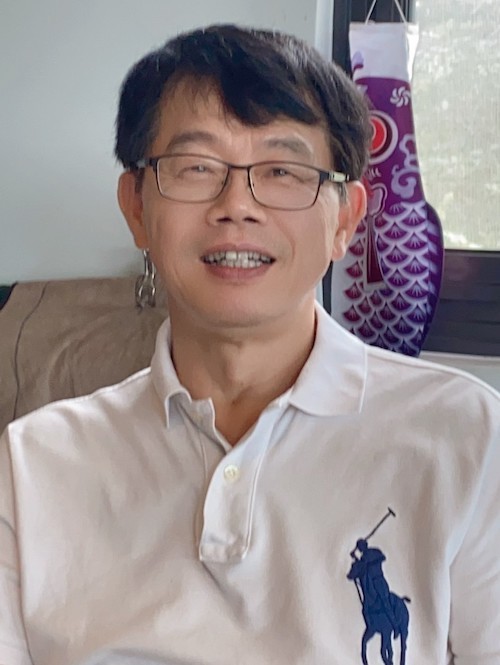
Prof. Cheng-Di Dong
International Honorary Member of American Academy of Environmental Engineering and Science;National Kaohsiung University of Science and Technology
Speech Title: Development of Peracetic Acid-based Advanced Oxidation Process for Sustainable Water Remediation
Abstract: Pharmaceutical residues in aquatic environments pose increasing risks to ecosystems, water quality, and human health, requiring sustainable and efficient remediation technologies. This study focuses on the development of peracetic acid-based advanced oxidation processes (PAA-AOPs) using novel catalysts derived from waste biomass and transition-metal materials. Biochar prepared from chestnut shell and kumquat peel was investigated for acetaminophen degradation, with pyrolysis temperature and surface modification shown to strongly influence adsorption, electron transfer, and PAA activation. ZIF-67 supported on kumquat peel-derived biochar enhanced reactive oxygen species generation and achieved high acetaminophen removal across a wide pH range with good reusability. Additionally, NiCo2O4 catalysts with different morphologies were developed for cephalexin degradation, where 3D NiCo2O4 exhibited superior crystallinity, oxygen vacancies, electron transfer ability, and catalytic performance. Overall, these PAA-based systems demonstrate strong potential for sustainable wastewater treatment and pharmaceutical pollutant removal.
Biography: Prof. Cheng-Di Dong is a Chair Professor in the Department of Marine Environmental Engineering, National Kaohsiung University of Science and Technology (NKUST), Taiwan. Dr. Dong obtained his Ph.D. in Environmental Engineering from the University of Delaware, USA in 1993 and M.S. in Environmental Science from New Jersey Institute of Technology, USA in 1990. Dr. Dong is Dean of the College of Hydrosphere of NKUST. Dr. Dong’s research focuses on waste-to-resources, biotechnology, nanotechnology, novel catalytic materials and biochar for environmental applications. Dr. Dong has published more than 500 research and review articles in leading international journals, 7 book chapters, and edited 6 special issues of scientific journals. His h-index is approximately 66, with more than 17,000 citations according to Google Scholar. He has won several scientific awards and grants from renowned academic bodies. Dr. Dong was in the “World’s Top 2% Scientist-Stanford University Releases List (2020, 2021, 2022, 2023)” for Environmental Sciences. He is a Fellow of International Bioprocessing Association. Dr. Dong currently serves as Editor of Sustainable Environment Research, and he is Editorial Board Member of Bioresource Technology. He has also served as Guest Editor of Special Issues in Bioresource Technology, Environmental Pollution, Bioresource Technology Report, Catalysts, and Applied Sciences.
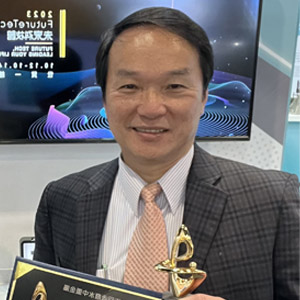
Prof. Ming-Chun Lu
Chair Professor, Department of Environmental Engineering, National Chung Hsing UniversitySpeech Title: Advancing Resource Recovery through Fluidized-Bed Homogeneous Crystallization Technology
Abstract: This presentation introduces fluidized-bed homogeneous crystallization (FBHC), a groundbreaking technology for recovering both metallic and non-metallic ions from water without the need for heterogeneous seeding. By integrating multiple treatment functions into a single reactor, FBHC requires only one-third of the land area compared to conventional precipitation systems. The process yields granular crystals with exceptionally low moisture content (≈5%), enabling up to 60% savings in sludge treatment costs—even when the product is treated as waste. Moreover, the absence of foreign seed materials ensures the production of high-purity crystals suitable for reuse. From a sustainability perspective, FBHC achieves superior dehydration efficiency, reducing carbon dioxide emissions by nearly 300 kg per ton relative to sludge generated by traditional chemical precipitation. The presentation will highlight reactor design and operating parameters, while also examining the granulation mechanism that underpins the formation of high-quality calcium carbonate crystals. Together, these advances demonstrate FBHC’s potential as a world-leading solution for resource recovery, cost reduction, and carbon mitigation.
Biography: Prof. Ming-Chun Lu is a Chair Professor in the Department of Environmental Engineering at National Chung Hsing University, Taiwan. He has served as an editor for Desalination since 2024 and has been an associate editor for Sustainable Environment Research since 2015. His outstanding achievements have been widely recognized with numerous honors. These include the Platinum Award at the Taiwan Innotech Expo Invention Competition in 2023 and 2024, the prestigious Future Technology Award from the National Science and Technology Council in both years, and the Outstanding Advisor Award for College Student Research and Creativity in 2023. He also led his team to win the championship in the Net-Zero Carbon Technology International Competition hosted by the TECO Technology Foundation in 2023 and was honored with the Outstanding Engineering Professor Award by the Chinese Institute of Engineers the same year. Professor Lu's research interests encompass advanced oxidation processes for water and wastewater treatment, fluidized-bed crystallization technology for treating wastewater containing metallic and non-metallic salts, and carbon dioxide capture from flue gas. He is also an innovator in developing disinfection, deodorization, antimicrobial, and antifungal technologies, as well as oil emulsification and desulfurization techniques. His work not only addresses pressing environmental challenges but also provides sustainable solutions that drive technological advancements.
Speakers will be updated…