
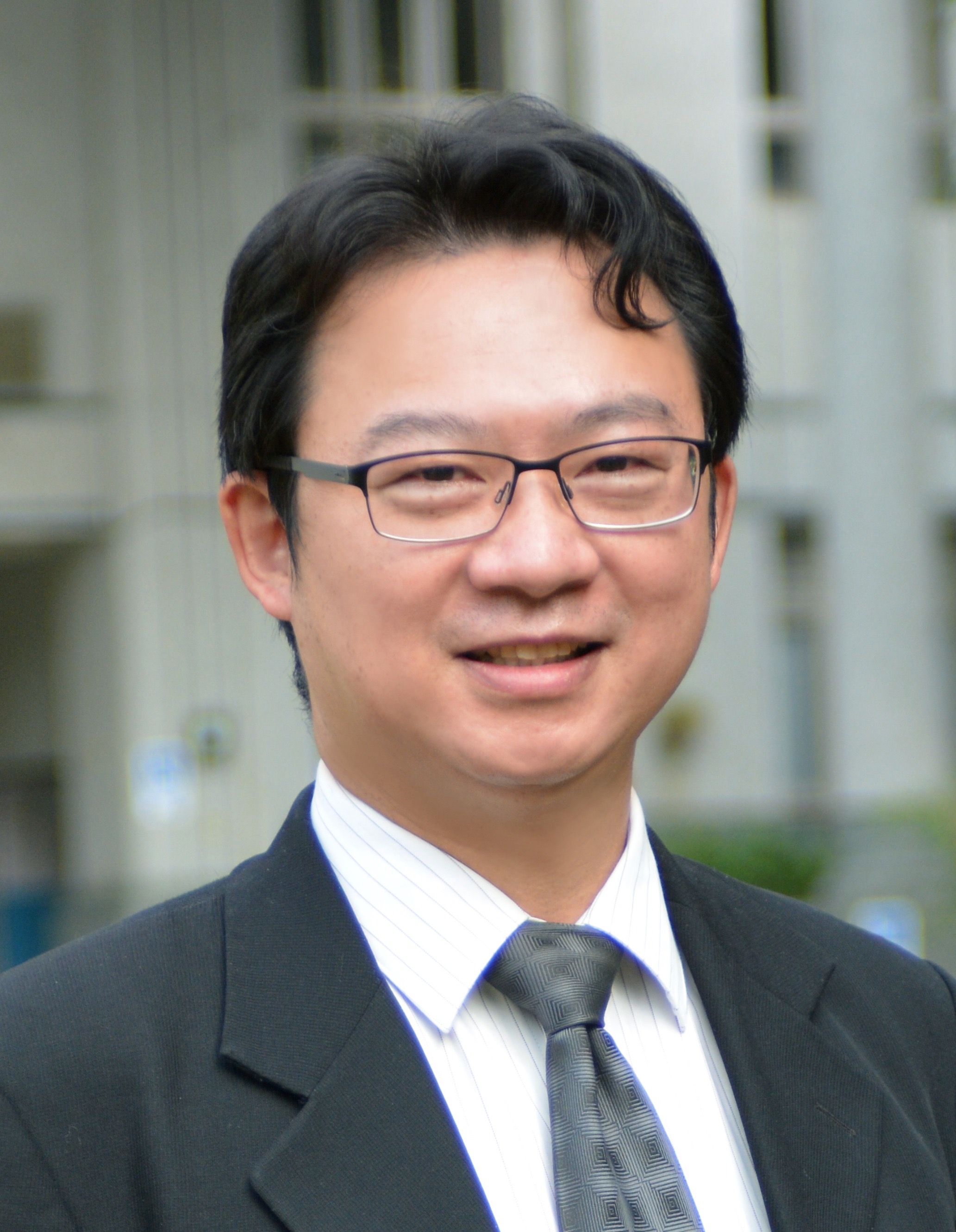
Assoc. Prof. Ku-Fan Chen
Institute of Environmental Engineering, National Sun Yat-sen UniversitySpeech Title: Iron-Modified Biochar Coupled with Near-Infrared Irradiation for Thermal Persulfate Activation to Degrade 1,2-Dichloroethane
Abstract: This study utilized water bamboo (Zizania latifolia) husks, an agricultural residue, as a biomass feedstock to produce biochar through pyrolysis. The biochar was subsequently modified with iron via an impregnation method to prepare iron-modified biochar (Fe/BC). By coupling Fe/BC with the photothermal effect induced by near-infrared (NIR) irradiation, a thermally activated persulfate (PS) oxidation system was developed to investigate the removal efficiency and reaction mechanisms of 1,2-dichloroethane (1,2-DCA) in water. The results showed that Fe/BC effectively promoted PS activation and significantly enhanced 1,2-DCA removal. Under NIR irradiation, Fe/BC converted light energy into heat, increasing the reaction temperature and accelerating PS decomposition and radical generation, thereby enhancing the oxidation process. Radical identification indicated that sulfate radicals (SO₄•⁻) and hydroxyl radicals (•OH) were the major reactive species responsible for 1,2-DCA degradation. Among the coexisting anions, carbonate species inhibited the reaction, whereas chloride ions may alter the reaction pathways. Reusability tests demonstrated that Fe/BC maintained good reactivity after multiple cycles. Overall, this study demonstrates that the NIR photothermal activation of persulfate using iron-modified biochar can efficiently remove 1,2-DCA. The system also offers advantages in terms of material sustainability and operational feasibility, suggesting its potential as a remediation technology for chlorinated organic contaminants in water and groundwater.